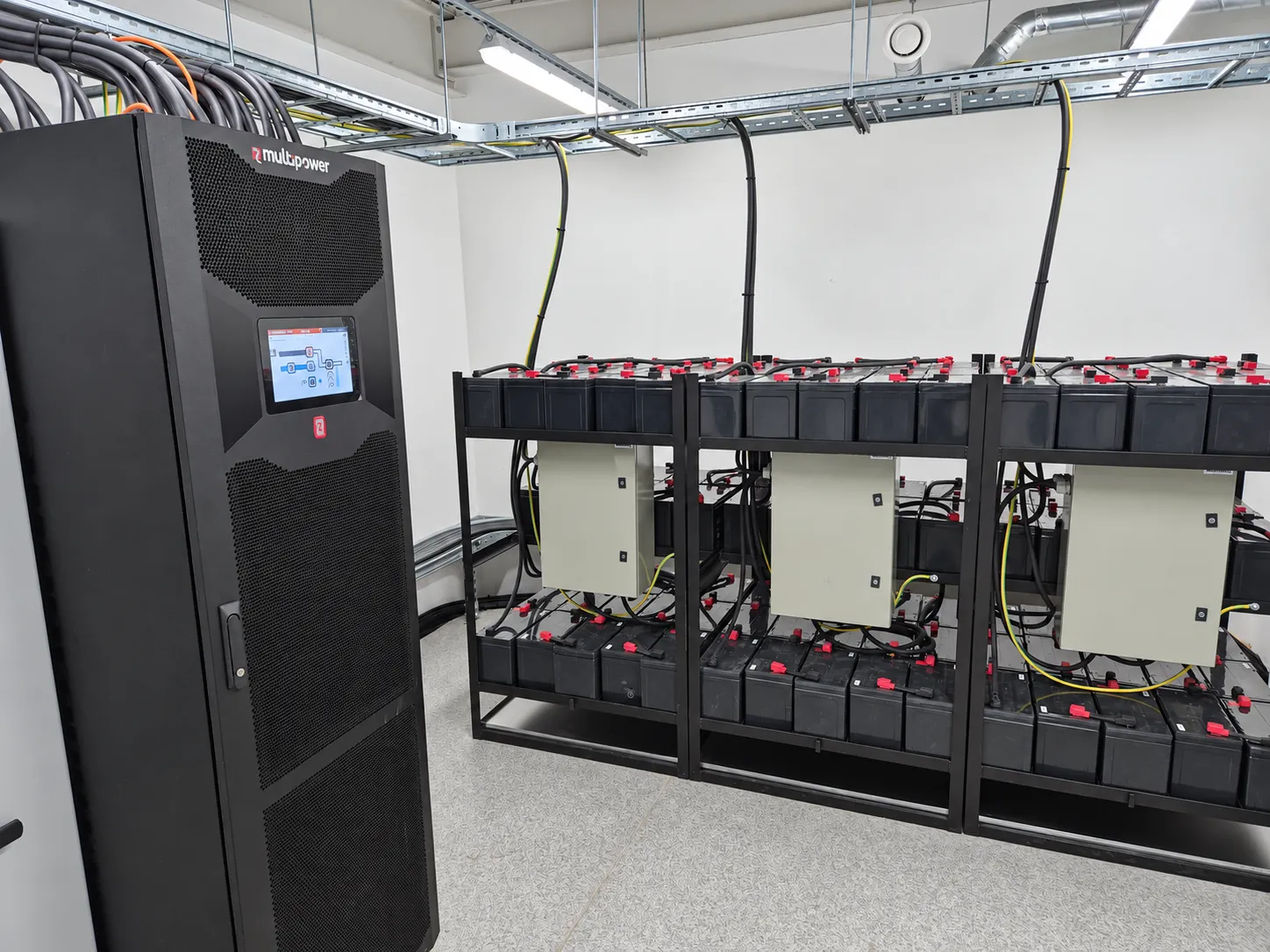
12 V thin-plate pure lead AGM VRLA battery block family for data center and telecom UPS systems; the top-terminal W models deliver 370–530 W/cell with 78–120 Ah capacity, and a front-terminal version is available for 19″ and 23″ cabinets, in a flame-retardant ABS container. Manufactured by FIAMM.
- Technology
- pure lead AGM VRLA, thin plate
- Nominal rating
- 12 V; 370–530 W/cell (15 min, 1.67 V/cell, 25 °C); 78–120 Ah (C10, 1.80 V/cell, 25 °C); top-terminal W models
- Design life
- Eurobat Very Long Life (>12 years)
- Terminal
- top, M8 female; front-terminal version for 19″/23″ cabinets
- Standards
- IEC 60896-21 and -22
- Container
- flame-retardant ABS, UL94 V-0
12 V AGM VRLA battery block family for the high-rate, short-duration discharge of UPS systems and data centers, delivering 103–710 W/cell with 24–200 Ah capacity, available with top or front terminals, in a flame-retardant ABS container. Manufactured by FIAMM.
- Technology
- AGM VRLA, high rate
- Nominal rating
- 12 V; 103–710 W/cell (15 min, 1.67 V/cell, 25 °C); 24–200 Ah (C10, 1.80 V/cell, 25 °C)
- Design life
- Eurobat Long Life (10/12 years) for top-terminal models, Very Long Life (>12 years) for front-terminal models
- Terminal
- top or front design; M5, M6 or M8 thread, model dependent
- Standards
- IEC 60896-21 and -22
- Container
- flame-retardant ABS, UL94 V-0
12 V front-terminal AGM VRLA battery block family for telecom and data center sites with high ambient temperature, for 19″ and 23″ cabinets, with 95–180 Ah capacity, designed for operating conditions up to 35 °C and suitable for frequent charge and discharge. Manufactured by FIAMM.
- Technology
- AGM VRLA, for operating conditions up to 35 °C
- Nominal rating
- 12 V; 95–180 Ah (C10, 1.80 V/cell, 20 °C)
- Design life
- 7 years at 35 °C (20 years at 20 °C); Eurobat Very Long Life (>12 years)
- Terminal
- front, M8 female; for 19″ and 23″ cabinets
- Standards
- IEC 60896-21 and -22
- Container
- flame-retardant, high-tensile-strength ABS, UL94 V-0
12 V front-terminal AGM VRLA battery block family for telecom backup power and industrial applications, for 19″ and 23″ cabinets, with 40–195 Ah capacity, a very long design life and good energy density, in a flame-retardant ABS container. Manufactured by FIAMM.
- Technology
- AGM VRLA, front terminal
- Nominal rating
- 12 V; 40–195 Ah (C10, 1.80 V/cell, 20 °C)
- Design life
- more than 12 years (very long design life)
- Terminal
- front; M6 or M8 thread, model dependent; for 19″ and 23″ cabinets
- Standards
- IEC 60896-21 and -22
- Container
- flame-retardant ABS, UL94 V-0
2 V tubular-plate gel VRLA (OPzV) cell family for telecom, industrial and utility DC systems, with 220–3,640 Ah capacity, for operation without water topping-up (periodic checks per the manufacturer's instructions still required) including intensive cyclic use, and suitable for horizontal installation in dedicated racks. Manufactured by FIAMM.
- Technology
- OPzV: tubular plate, gel electrolyte VRLA
- Nominal rating
- 2 V; 220–3,640 Ah (C10, 1.80 V/cell, 20 °C)
- Design life
- 20 years; Eurobat Very Long Life (12 years and longer)
- Terminal
- M10 female
- Standards
- IEC 60896-21 and -22, DIN 40742, IEC 61427
- Container
- ABS; flame-retardant UL94 V-0 version on request
2 V vented, flooded tubular-plate OPzS cell family for telecom, industrial UPS, utility, railway and oil and gas DC systems, with 108–3,500 Ah capacity and very low water consumption, in a transparent container. Manufactured by FIAMM.
- Technology
- OPzS: vented, flooded, tubular plate; not VRLA
- Nominal rating
- 2 V; 108–3,500 Ah (C10, 1.80 V/cell, 20 °C)
- Design life
- 20 years
- Terminal
- M10 female
- Standards
- DIN 40736-1, IEC 60896-11
- Container
- transparent SAN (styrene acrylonitrile)
19″ rack-mount LiFePO4 battery module for telecom backup power, residential and small commercial energy storage and off-grid systems, with 51.2 V nominal voltage and 5.12 kWh energy, expandable to 32 modules in parallel, with CAN and RS485 communication. Manufactured by TAB.
- Nominal rating, cell chemistry
- 51.2 V / 5,120 Wh; LiFePO4 (LFP)
- Charge/discharge current
- 75 A recommended continuous; max 100 A continuous (at 10–35 °C); 200 A peak (15 s)
- Scalability
- max 32 modules in parallel (approx. 164 kWh); 6 × 32 modules with TAB LV HUB (approx. 983 kWh); no series connection
- Communication, certification
- CAN, RS485; IEC 62619, IEC 63056, UN38.3, CE
- Operating temperature, protection rating
- 0–45 °C; IP20
- Compatibility
- Delta, Vertiv and Eaton telecom power systems
Building block for commercial and industrial battery energy storage systems (BESS): a LiFePO4 battery module with 51.2 V nominal voltage and 10.24 kWh energy, connected in series for 48 V to 1,000 V systems, for peak shaving, self-consumption optimization and backup power. Manufactured by TAB.
- Nominal rating
- 51.2 V / 10,240 Wh
- Cell chemistry
- LiFePO4 (LFP)
- Charge/discharge current
- 140 A
- Scalability
- max 18 modules in series per string (921.6 V, approx. 183 kWh), with S920 master module; strings can be paralleled
- Communication, certification
- CAN, RS485; IEC 62619, IEC 63056, UN38.3, CE
- Operating temperature, protection rating
- charge 0–60 °C, discharge −20–60 °C; IP20
LiFePO4 traction battery family for forklifts and industrial vehicles, configurable to custom voltage and capacity, with 12–96 V voltage and 1.2–115.2 kWh energy, suitable for fast and opportunity charging, in dimensions that replace lead-acid batteries. Manufactured by TAB.
- Voltage, capacity, energy
- 12–96 V; 50–1,400 Ah; 1.2–115.2 kWh
- Cell chemistry
- LiFePO4
- Cycle life
- 2,000 cycles (0.5C) / 3,000 cycles (0.2C), 80% DoD
- Operating temperature
- −20 to +55 °C operation; 0 to +50 °C charging
- Protection rating, socket
- IP54 (IP65 optional); DIN 160 / 320 A
- Communication, certification
- CAN, RS485; UN 38.3, IEC 62619
LFP battery module for off-grid and backup power systems, peak shaving and uninterruptible supply, for rack, wall or floor-stand mounting, rated 51.2 V / 100 Ah, parallelable up to 16 modules per group, for vertical or horizontal installation. Manufactured by Pytes.
- Nominal rating, cell chemistry
- 51.2 V / 100 Ah / 5.12 kWh; LFP
- Cycle life
- 6,000 cycles (0.5C, 25 °C, 90% DoD)
- Charge/discharge current
- 50 A continuous; 102 A peak discharge (15 s)
- Scalability
- 16 modules per group (81.92 kWh); 6 groups with a Hub (491.52 kWh)
- Communication, certification
- CAN / RS485; CE, IEC 62619, UN38.3
- Operating temperature
- charge 0–45 °C; discharge −10–50 °C
Rack-mount LFP battery module family for residential and small commercial inverter-based energy storage systems, rated 51.2 V / 100 Ah, parallelable up to 16 modules per group, with bolt or quick-connect terminals, remote monitoring and an optional heating pad for cold environments. Manufactured by Pytes.
- Nominal rating, cell chemistry
- 51.2 V / 100 Ah / 5.12 kWh; LFP
- Cycle life
- 6,000 cycles (0.2C, 25 °C, 90% DoD)
- Charge/discharge current
- 75 A recommended; max 100 A continuous (at 10–40 °C cell temperature); peak 180 A, 200 A for V5°α Plus (15 s)
- Scalability
- 16 modules per group (81.92 kWh); 6 groups with a Hub (491.52 kWh)
- Communication, certification
- RS485 / CAN / dry contact; CE, IEC 62619, UN38.3
- Operating temperature, protection rating
- charge 0–45 °C; discharge −10–50 °C; IP20
High-voltage LFP battery system family for commercial and industrial energy storage, built from 5.12 kWh modules: the indoor HV48100 cabinet and the outdoor, air-conditioned HV48100 SE cabinet, with 25.6–76.8 kWh energy per system, series-connected modules and a built-in battery control unit. Manufactured by Pytes.
- Nominal rating, cell chemistry
- module: 51.2 V / 100 Ah / 5.12 kWh, LFP; system: 5–15 modules in series, 256–768 V, 25.6–76.8 kWh
- Cycle life
- ≥6,000 cycles (0.5C, 25 °C, 90% DoD, 70% end-of-life capacity) – HV48100 SE
- Charge/discharge current
- 50 A continuous per string
- Scalability
- HV48100 SE: max 3 cabinets (2P configuration) or 6 cabinets (1P configuration) per inverter
- Communication, certification
- CAN, RS485, dry contact; CE, IEC 62619 (for the battery system), UN38.3
- Protection rating, temperature
- HV48100: IP20, charge 0–45 °C, discharge −10–50 °C; HV48100 SE: IP55, −20 to +50 °C, 2 kW air conditioner